Symptoms of Chronic Stress: How It Affects Your Brain, Gut, Sleep, and Hair
Stress is an unavoidable part of life. In small doses, it can sharpen your focus, improve performance, and help you respond quickly to challenges. But when stress becomes constant, your body never gets the chance to recover. Instead of helping you adapt, chronic stress begins disrupting the very systems designed to keep you healthy.
Constant stress leads to brain fog, digestive issues, restless nights, and/or unexplained hair shedding. They may seem like separate problems, but they can all come from the same cause. That cause is your body’s stress response staying active for too long.
Understanding how chronic stress affects your brain, gut, sleep, and hair can help you recognize the warning signs early and take steps to restore your health before they cause problems.
What Happens to Your Body During Chronic Stress?
Your body has a built-in stress response system that helps you respond to threats. When you experience stress, the hypothalamic-pituitary-adrenal (HPA) axis activates and signals the adrenal glands to release cortisol and adrenaline.
These hormones increase your heart rate, raise blood pressure, and make more energy available to your muscles and brain. This is known as the fight-or-flight response. Common short-term symptoms include a racing heart, muscle tension, and butterflies in your stomach.
When stress continues for weeks or months, the HPA axis remains active for longer than it should. Persistently high cortisol levels can affect multiple body systems, including the brain, digestive system, immune system, sleep, metabolism, skin, and hair. As a result, chronic stress causes both mental and physical symptoms.
Four Ways Chronic Stress Affects Your Body
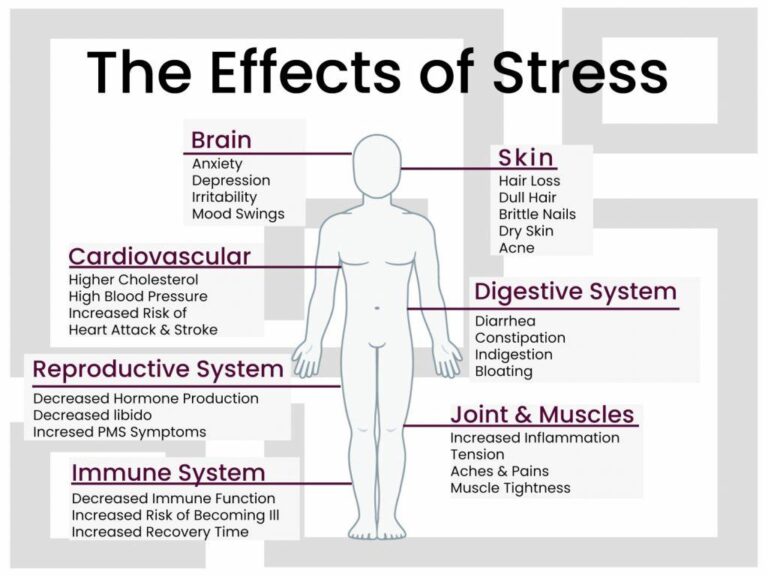
The human body is made up of interconnected biological systems. When one system is disrupted, it can affect the function of others. Chronic stress triggers changes across these systems, which is why its effects often extend beyond mental health and cause symptoms throughout the body.
Brain: Why You Feel Foggy and Overwhelmed
Prolonged cortisol exposure weakens the prefrontal cortex, affecting concentration, memory, planning, and decision-making. At the same time, the amygdala becomes more active, increasing anxiety and emotional reactivity. Common symptoms include brain fog, forgetfulness, reduced productivity, and feeling overwhelmed.
Gut: The Gut-Brain Connection
The gut and brain communicate through the vagus nerve. Chronic stress disrupts digestion, alters the gut microbiome, and may contribute to bloating, IBS flare-ups, acid reflux, constipation, diarrhea, and increased inflammation.
Sleep: Why You’re Tired After 8 Hours of Sleep
Sleep depends on a healthy balance between cortisol and melatonin. Chronic stress can keep cortisol levels elevated into the evening, delaying melatonin release and making it harder to fall asleep or stay asleep. As a result, you may spend 8 hours in bed but still wake up feeling tired because your sleep quality has been disrupted.
Hair: Why Stress Can Cause Hair Loss
Stress hair loss is common. Stress triggers telogen effluvium, a temporary condition where more hair follicles enter the resting phase. Hair shedding usually appears two to three months after a stressful event but often improves once stress levels normalize.
How to Break the Chronic Stress Cycle
Breaking the stress cycle starts with reducing ongoing activation of your body’s stress response. Small, consistent lifestyle changes can help regulate cortisol levels and support recovery.
- Prioritize quality sleep: Aim for 7–9 hours of sleep and maintain a consistent bedtime and wake-up schedule.
- Eat a balanced, fiber-rich diet: Include whole grains, fruits, vegetables, legumes, and lean protein to support gut health and steady energy levels.
- Exercise regularly: At least 150 minutes of moderate physical activity each week can help reduce stress and improve mood.
- Practice stress management: Mindfulness, deep breathing, meditation, or yoga can help reduce stress and improve emotional well-being.
- Spend time outdoors: Regular exposure to nature and daylight supports mental health and helps regulate your sleep-wake cycle.
- Set healthy boundaries: Take regular breaks, limit work outside working hours, and make time for rest and activities you enjoy.
If stress symptoms persist, worsen, or interfere with your daily life, speak with a healthcare professional or mental health provider for evaluation and support.
FAQs
Can chronic stress make you feel sick?
Yes, chronic stress directly causes physical illness by flooding your body with cortisol, which weakens your immune system, disrupts gut health, elevates blood pressure, and triggers persistent fatigue and hair loss.
How long does it take for your body to recover from chronic stress?
Recovery varies depending on how long you’ve been under stress, your overall health, and the steps you take to manage it.
Can chronic stress cause physical symptoms even if medical tests are normal?
Yes. Chronic stress can produce real physical symptoms even when routine medical tests don’t identify an underlying disease. Persistent activation of the body’s stress response can affect sleep, digestion, pain perception, and energy levels.
Conclusion
Chronic stress affects far more than your mood. It influences nearly every major system in your body, but many of these changes are reversible. Recognizing the signs early and taking consistent steps toward recovery can help restore your physical and mental well-being.
This is the approach I bring to my healthcare SEO content writing services: I aim to deliver clear, search-optimized content that helps healthcare brands communicate complex topics in a way real people can understand. SEO may help people find your content, but clarity, accuracy, and trust keep them coming back.
About the Author
Arooj Anjum is a health content writer with 10 years of experience creating SEO-driven content for healthcare and wellness brands. She now helps B2B healthcare companies grow through evidence-based, search-optimized content that builds trust and drives organic visibility.

Medical Disclaimer
This article is for informational and educational purposes only and should not be considered medical advice, diagnosis, or treatment. Chronic stress can cause symptoms that overlap with other medical conditions. If you have persistent or worsening symptoms, consult a qualified healthcare professional for an accurate diagnosis and appropriate care. Never delay or disregard professional medical advice based on information you have read online.