Vitamin D Deficiency Symptoms in Adults: Signs, Causes, and When to Seek Help
Vitamin D deficiency symptoms in adults can be easy to overlook because they develop gradually and resemble everyday problems like stress, aging, or poor sleep. Common symptoms include feeling tired all the time, muscle weakness, and persistent bone pain. While these signs may seem unrelated, they shouldn’t be ignored. Find out more about vitamin D deficiency symptoms and treatment plans.
What Is Vitamin D Deficiency?
Vitamin D deficiency happens when your body doesn’t have enough vitamin D to stay healthy. It can affect your bones, muscles, immune system, and overall well-being. Many people don’t realize they have low vitamin D because the symptoms often develop gradually and can be mistaken for stress, aging, or poor sleep.
Common reasons for low vitamin D levels include not getting enough sunlight, eating too few vitamin D-rich foods, or having certain medical conditions that affect vitamin D absorption.
The good news is that vitamin D deficiency can usually be diagnosed with a simple blood test and treated with the right combination of supplements, diet, and lifestyle changes under the guidance of a healthcare provider.
Top 5 Common Vitamin D Deficiency Symptoms in Adults
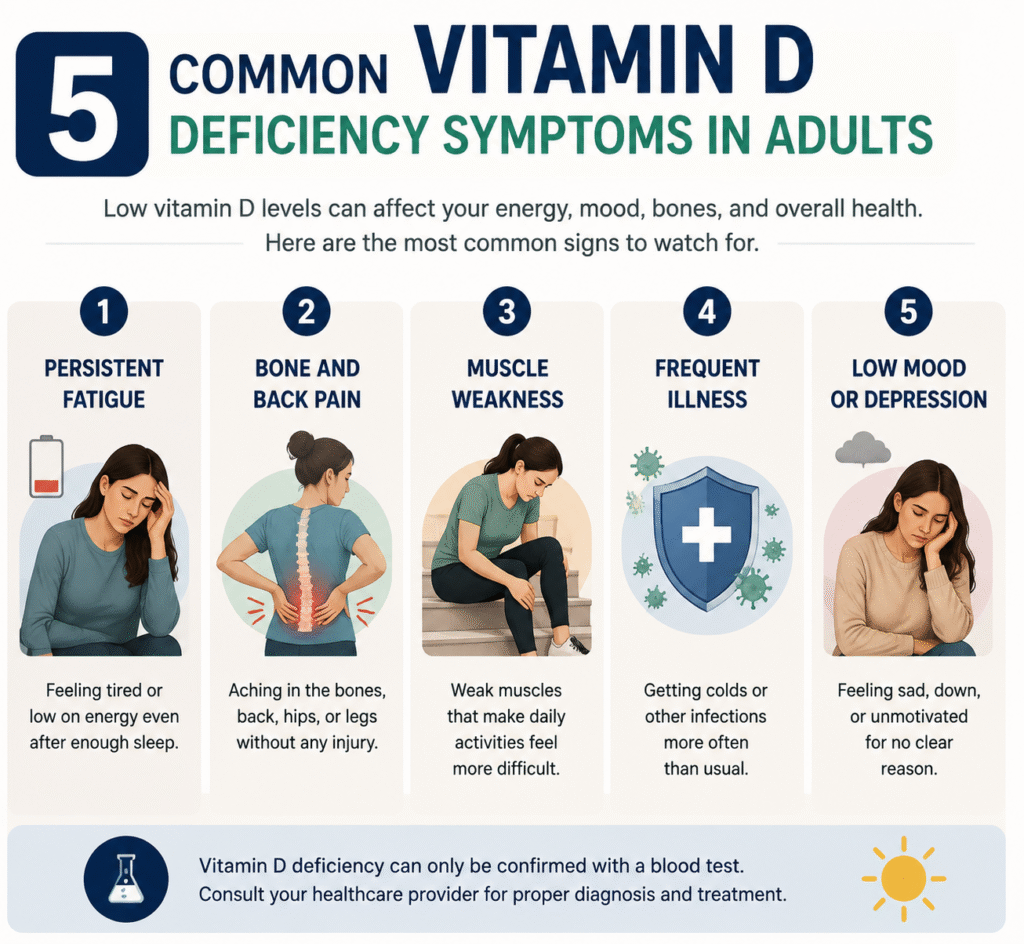
Vitamin D deficiency symptoms in adults often develop gradually and can be easy to overlook. Many people mistake them for stress, aging, or poor sleep. If you notice persistent symptoms or several of the signs below, speak with your healthcare provider. A 25-hydroxy vitamin D blood test is the only reliable way to diagnose vitamin D deficiency.
Persistent Fatigue
Many people with low vitamin D levels feel tired or low on energy even after getting enough sleep. While fatigue has many possible causes, vitamin D deficiency is one possibility your healthcare provider may consider.
Bone Pain
Low vitamin D can cause aching or discomfort, especially in the lower back, hips, ribs, or legs. A healthcare provider should always evaluate persistent bone pain.
Muscle Weakness
Low vitamin D may contribute to muscle weakness, making everyday activities like climbing stairs or getting up from a chair more difficult. In older adults, it may also increase the risk of falls
Frequent Illness
Vitamin D supports normal immune function. People with low vitamin D levels may experience more frequent colds or other infections, although many factors can affect how often you get sick.
Low Mood/Depression
Some studies suggest an association between low vitamin D levels and low mood. However, vitamin D deficiency has not been proven to directly cause depression, and a healthcare provider should assess persistent mood changes.
Remember: These symptoms can have many causes. Symptoms alone cannot diagnose vitamin D deficiency. A 25-hydroxy vitamin D blood test is the only reliable way to confirm whether your vitamin D levels are low.
Top 5 Common Causes of Vitamin D Deficiency
Vitamin D deficiency occurs when your body doesn’t get enough vitamin D or cannot absorb or use it effectively. While anyone can develop a deficiency, certain factors increase the risk. Here are the five most common causes of vitamin D deficiency.
Limited Sun Exposure
Your skin produces vitamin D when it’s exposed to sunlight. Spending most of your time indoors, living in areas with limited sunlight, or regularly wearing clothing that covers most of your skin can reduce vitamin D production. Sunscreen also decreases vitamin D synthesis, but it’s still important to use it to protect against skin damage and skin cancer.
Aging
As you age, your skin becomes less efficient at producing vitamin D, and your kidneys may become less effective at converting it into its active form. This makes older adults more likely to develop vitamin D deficiency.
Low Dietery Intake
Not eating enough vitamin D-rich foods can contribute to low vitamin D levels over time. Natural food sources include fatty fish, egg yolks, and beef liver. Many dairy products, breakfast cereals, and plant-based milk alternatives are also fortified with vitamin D to help increase intake.
Darker Skin
People with darker skin have more melanin, which reduces the skin’s ability to produce vitamin D from sunlight. As a result, they may need more sun exposure than people with lighter skin to produce the same amount of vitamin D.
Certain Medications
Some health conditions can interfere with vitamin D absorption or metabolism. Digestive disorders such as celiac disease, Crohn’s disease, and inflammatory bowel disease can reduce nutrient absorption. Kidney and liver diseases can also affect the body’s ability to activate and use vitamin D effectively.
Remember: Having one or more of these risk factors doesn’t necessarily mean you have vitamin D deficiency. If you’re concerned about your vitamin D levels, speak with your healthcare provider. A 25-hydroxy vitamin D blood test is the most reliable way to diagnose a deficiency.
If you have one or more of these risk factors and are experiencing vitamin D deficiency symptoms in adults, your healthcare provider may recommend a blood test to check your vitamin D levels.
Who Is Most at Risk of Vitamin D Deficiency?
Anyone can develop vitamin D deficiency, but some people are at a higher risk than others. Knowing these risk factors can help you and your healthcare provider decide whether testing is appropriate.
People at higher risk include:
- Older adults, whose skin becomes less efficient at producing vitamin D with age.
- People who spend most of their time indoors or get very little sunlight.
- Individuals with darker skin, as higher melanin levels reduce the skin’s ability to produce vitamin D from sunlight.
- Pregnant and breastfeeding women, who may have increased vitamin D needs.
- People with obesity, because vitamin D can become stored in body fat, leaving less available for the body to use.
- Individuals with digestive disorders, such as celiac disease or Crohn’s disease, which can reduce vitamin D absorption.
If you belong to one of these groups and have symptoms of low vitamin D, talk to your healthcare provider about whether a blood test is recommended.
How Is Vitamin D Deficiency Diagnosed?
Vitamin D deficiency is diagnosed with a 25-hydroxy vitamin D [25(OH)D] blood test. Your healthcare provider will also review your symptoms, medical history, diet, and sun exposure. Because symptoms can have many causes, a blood test is needed to confirm a deficiency.
Treatment and Prevention
If you have vitamin D deficiency, your healthcare provider may recommend vitamin D supplements. You can also help maintain healthy levels with safe sun exposure and vitamin D-rich or fortified foods. Avoid taking high-dose supplements unless advised by your healthcare provider.
See a healthcare provider if you have persistent fatigue, bone pain, muscle weakness, frequent fractures, or symptoms that don’t improve. A 25-hydroxy vitamin D blood test can confirm whether low vitamin D is the cause.
Frequently Asked Questions
What are the first signs of vitamin D deficiency?
Early signs may include fatigue, muscle weakness, bone discomfort, frequent illness, and low mood. However, some people have no noticeable symptoms.
Can vitamin D deficiency cause fatigue?
Yes. Fatigue is one of the most commonly reported symptoms, although it can also have many other causes. A blood test is needed to confirm whether vitamin D deficiency is contributing.
Which foods are high in Vitamin D?
Fatty fish, egg yolks, beef liver, UV-exposed mushrooms, and fortified foods such as milk, yogurt, cereals, and some plant-based beverages are among the best dietary sources.
Conclusion
Vitamin D plays an important role in keeping your bones, muscles, immune system, and overall health functioning properly. Although symptoms such as fatigue or muscle weakness may suggest a deficiency, only a blood test can confirm the diagnosis. If you think your vitamin D levels may be low, consult a healthcare professional before starting supplements. Early diagnosis and appropriate treatment can help restore healthy vitamin D levels and support your long-term well-being.
Medical Disclaimer
This article is for educational purposes only and is not a substitute for professional medical advice, diagnosis, or treatment. If you think you may have vitamin D deficiency or have persistent symptoms, consult a qualified healthcare provider. Do not start or change supplements based solely on information in this article.
Written by Arooj Anjum, an SEO content writer specializing in clear, evidence-based health and wellness content.