The Gut-Brain Connection: Why Your Stress is Messing with Your Digestion (And How to Fix It)
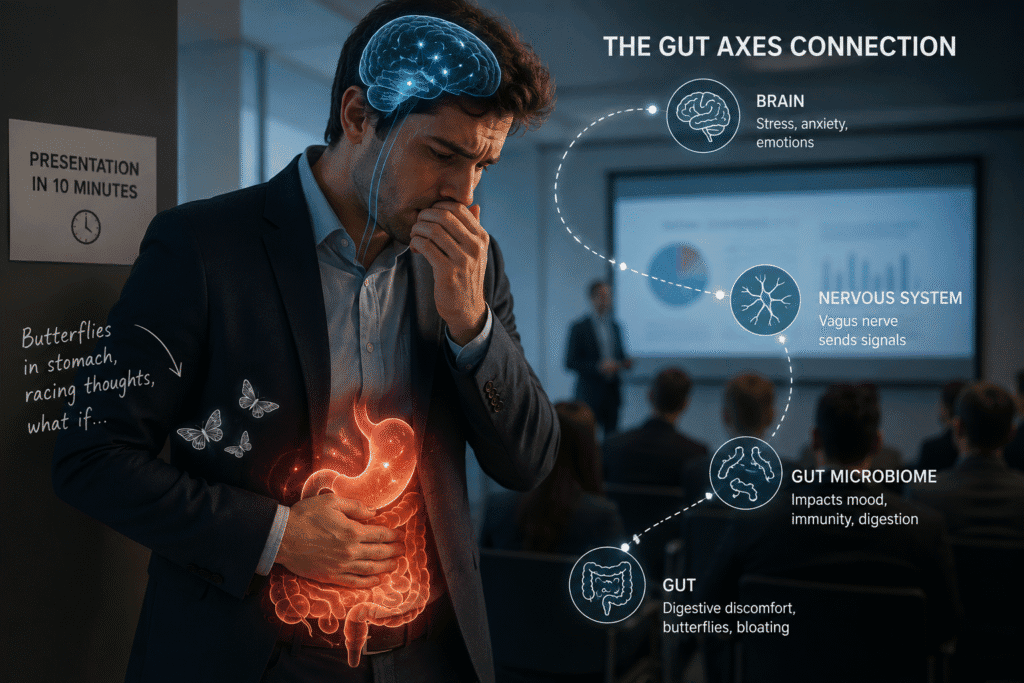
The gut-brain connection explains why stress affects digestion and creates those unexpected “butterflies” in your stomach. We’ve all been there. You walk into an exam hall, sit down for an interview, or go on an important date. Then your stomach reacts before your brain does. Maybe you feel cramps, your stomach starts churning, or you think, “I need to find a bathroom right now.” Or maybe you’ve seen someone you love and felt those familiar butterflies in your stomach.
Is it just love? Is it just anxiety?
Not exactly. It’s biology.
This is the gut-brain connection. There is constant communication between your digestive system and your brain. It happens through a network called the gut-brain axis. One key pathway is the vagus nerve, the main communication highway between your brain and digestive system. It is a biological communication highway. It carries signals between your brain and digestive system. Do you know your gut contains a network of neurons called the enteric nervous system (ENS)? It’s often referred to as your “second brain.”
So when stress affects your mind, your gut can feel it too because your brain and digestive system are always communicating behind the scenes. Those stomach flips, nervous cramps, and digestive changes aren’t random. They’re your body responding through a fascinating biological connection.
The Science Behind the Gut-Brain Connection
Your brain and gut are constantly communicating, but when stress enters the picture, that conversation changes. Think of your body as having an emergency mode. When your brain senses stress, it prioritizes survival over digestion. This response helped our ancestors avoid danger. Today, stress from work, exams, relationships, or daily life can keep it active for too long.
How Stress Puts Digestion on the Back Burner
When you’re stressed, your body activates the fight-or-flight response. Your brain signals the release of stress hormones like cortisol and adrenaline, preparing you to deal with a threat. The result? Blood flow and energy shift away from digestion and toward systems that help you respond quickly. This can slow digestion and contribute to symptoms such as stomach discomfort, bloating, changes in bowel habits, or nausea.
Your Gut and Mood Are Connected Through Chemical Messengers
Your gut doesn’t just digest food. It also helps make and control chemicals that support communication between your gut and brain. Around 90–95% of the body’s serotonin is produced in the gut, although most of it is involved in regulating gut functions rather than directly controlling mood.
This is why researchers often describe the gut and brain as being connected in a two-way conversation:
- Stress can affect your gut.
- Gut changes can influence how you feel.
Together, they can create a cycle that affects your overall well-being.
The Microbiome Mayhem: How Stress Disrupts Your Gut Bacteria
Inside your digestive system lives a community of trillions of microorganisms known as the gut microbiome. These “good bacteria” help support digestion, immune function, and the balance of your gut environment.
Chronic stress can disrupt this balance, potentially contributing to digestive issues such as:
- Bloating
- Irregular bowel movements
- General stomach discomfort
💡 The takeaway? Stress doesn’t just happen in your head. Your gut feels it too. Understanding the gut-brain connection is the first step toward supporting both your mental well-being and digestive health.
Beyond the Belly: How Stress Impacts Your Whole Body
The effects of chronic stress don’t always stay in your digestive system. Because your brain communicates with your entire body, ongoing stress can show up in different ways:
- Constant Fatigue: You may feel tired even after 8 hours of sleep. Long-term stress can harm sleep quality and energy levels. It can also slow your body’s recovery.
- Stress hair fall: Stress can also affect your hair growth cycle. During periods of significant stress, some hair follicles can enter a resting phase earlier than usual, which may lead to increased shedding weeks or months later.
The Reset Button: Practical Ways to Calm Your Mind and Support Your Gut
The gut-brain connection works both ways. While stress can affect your digestion, supporting your gut health can also help your body better manage stress responses.
Here are simple, science-backed habits you can start with:
Eat in “Rest and Digest” Mode, Not “Fight-or-Flight
Eating is about the state your body is in while you eat. When you eat quickly or eat while scrolling and stay distracted, your body may remain in a state of stress instead of shifting into “rest and digest” mode.
These small habits can help your nervous system recognize that it’s safe to focus on digestion:
- Sit Down & Step Away: Keep the screens away and dedicate your mealtime to just eating.
- Slow Down & Chew: Do not rush. Chewing your food thoroughly makes digestion infinitely easier on your stomach.
- Engage Your Senses: Pay active attention to the flavors, aromas, and textures of your food.
Feed Your Gut’s Good Bacteria
When you are constantly stressed, your body produces hormones that physically alter your gut environment. This causes a bacterial imbalance (dysbiosis). It reduces the number of friendly, health-promoting bacteria and lets harmful microbes multiply.
To fight this imbalance and rebuild, your gut microbiome needs the right fuel. Two important players are probiotics and prebiotics
Probiotics (The Helpful Bacteria): These add beneficial bacteria directly to your system. You can find them in:
- Yogurt with live cultures
- Kefir
- Fermented foods such as kimchi or sauerkraut
Prebiotics (The Fuel): These are types of fiber that feed those helpful bacteria so they can thrive. Excellent sources include:
- Fruits and vegetables
- Whole grains
- Beans and legumes
- Garlic and onions
Quick Tip: Think of probiotics as adding friendly workers to your gut, and prebiotics as providing the food they need to do their job.
Activate Your Body’s “Rest and Digest” Response
One of the easiest ways to support your gut-brain connection is by engaging in activities that calm your nervous system.
Deep, slow breathing is a powerful tool because it directly stimulates your vagus nerve—the main communication highway between your brain and digestive system.
Try this quick exercise before your next meal:
- Inhale slowly through your nose for 4 seconds.
- Hold your breath for just a moment.
- Exhale slowly through your mouth for 6–8 seconds (making the exhale longer than the inhale signals safety to your brain).
- Repeat this cycle for 2 to 3 minutes.
The goal isn’t to remove all stress from your life. It’s to help your body shift out of constant alert mode.
Then your digestion can do its job. These small, daily habits create a much healthier conversation between your brain and your gut.
FAQs: Gut-Brain Connection and Stress
How does stress affect digestion?
Stress activates the body’s fight-or-flight response, which can shift energy away from digestion and affect how your gut functions. This may lead to symptoms like bloating, stomach discomfort, nausea, or changes in bowel habits.
What is the gut-brain connection?
The gut-brain connection is the communication network between your digestive system and your brain. Through pathways like the vagus nerve, your gut and brain constantly send signals that influence digestion, mood, and stress responses.
Why do I get butterflies in my stomach when I’m nervous?
The “butterflies” feeling happens because your brain and gut are connected through the gut-brain axis. When you feel nervous or stressed, your body releases stress hormones. These hormones can affect digestion. They may cause stomach fluttering or discomfort.
Conclusion: Your Gut and Brain Are Always Connected
Your mental and physical health are deeply connected. Stress in your mind can show up in your gut, while your gut health can influence how you feel. The gut-brain connection, vagus nerve, and gut microbiome all play a role in this constant communication between your body and brain. Supporting your gut isn’t just about digestion; it’s about supporting your overall well-being.
Explaining complex health topics requires accurate research, clear communication, and responsible SEO medical writing. It helps readers understand and trust the information they find.
If you’re a health or wellness brand looking for medically accurate, engaging content that builds trust and keeps readers engaged, contact me as I am a healthcare SEO writer.
Healthcare websites need specialized seo content that meets high standards of accuracy, credibility, and E-E-A-T. This is essential for building authority with both readers and search engines.
Learn more:
- How to Build Trust and Improve Your Healthcare Website’s E-E-A-T
- Why Healthcare Websites Need Specialized Healthcare SEO Writing Services to Rank on Google
Let’s create content that strengthens your brand authority and turns complex health information into clear, valuable experiences for your audience. Explore my healthcare SEO writing to scale your brand.
Medical Disclaimer: The information provided in this article is for educational and informational purposes only and is not intended as medical advice. Always consult with a qualified healthcare professional or doctor before making any changes to your diet, health routine, or treatment plan.