Why Do I Feel Tired Even After 8 Hours of Sleep?
Imagine waking up tired after 8 hours of sleep and feeling frustrated even though you got a full night’s rest. You think to yourself, “Why am I always tired?” Have you been there?
A lot of research has been conducted to determine whether sleep quality or quantity matters more. In many cases, the culprit is poor sleep quality. You may spend 8 hours in bed, but if your sleep is constantly interrupted, you can still wake up tired.
Arooj Anjum
Hi, I’m Arooj Anjum, an SEO health & wellness content writer specializing in E-E-A-T-compliant medical content.

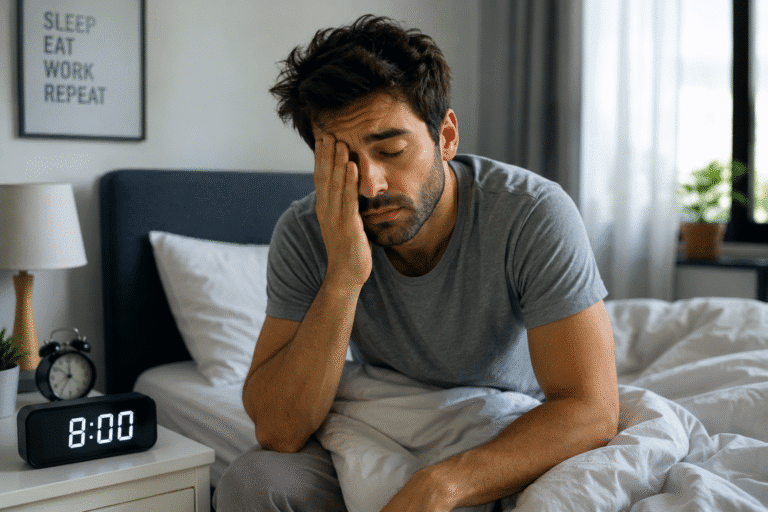
You're Getting Quantity, But Not Quality (The Sleep Cycle Problem)
Understanding sleep time matters, but spending eight hours tossing and turning does not mean you slept well. Deep sleep is essential; otherwise, your brain’s restorative processes become depleted.
This is one of the biggest reasons people feel tired after 8 hours of sleep and wonder, “Why am I always tired?”
What Disrupts Your Sleep Cycles?
- Alcohol Before Bed: Drinking alcohol before sleep may make you feel drowsy. However, it can block REM sleep. This can lead to broken sleep that feels less restful.
- Late-Day Caffeine: Drinking caffeine before winding down can block your brain’s natural sleep triggers. Even consuming coffee six hours before bedtime can interfere with deep sleep.
- Late-Night Blue Light: One of the biggest culprits is social media. Endlessly scrolling through your phone tricks your brain into thinking it’s still daytime and delays melatonin production.
- Room Temperature: A room that is too hot can ruin your rest. Maintaining a slightly cooler room temperature is important for deep sleep.
- Late-Night Heavy Meals: There is a reason doctors recommend avoiding late-night meals. Eating heavily before bed can disrupt your metabolism and interfere with sleep quality.
Nutritional Deficiencies and Dehydration
Sometimes, nutritional deficiencies and dehydration can make you feel tired after 8 hours of sleep.
Some common deficiencies include:
- Iron Deficiency (Anemia): Low iron means low hemoglobin. Your brain and muscles become deprived of oxygen, causing deep, bone-crushing fatigue and even chronic fatigue.
- Vitamin D and B12 Deficiencies: Vitamin D supports energy metabolism, while vitamin B12 is essential for nerve function. Low levels of either can cause persistent sluggishness and chronic fatigue.
- Dehydration: Waking up dehydrated slows down blood flow. Your heart has to work harder to deliver oxygen, leaving you feeling drained as soon as the alarm goes off.
Chronic Stress and Mental Burnout
Who says fatigue has to be physical? Sometimes, mental burnout can lead to a disrupted sleep cycle and chronic fatigue.
When you feel anxious, your body triggers the fight-or-flight response. It releases cortisol and adrenaline, which can keep you on edge.
This survival mode doesn’t simply switch off when you sleep. Your brain remains hyper-vigilant throughout the night, blocking deep sleep and making you feel exhausted the next day.
If you’re constantly asking yourself, “Why am I always tired?”, stress and mental burnout could be contributing factors.
Poor Circadian Alignment (Social Jet Lag)
Disrupting your circadian rhythm can throw off your biological clock, which depends on consistency. Shifting your sleep schedule on weekends can disrupt your natural sleep cycle and leave you tired after 8 hours of sleep the following day.
Your body can get confused. It may not know when to release melatonin to help you sleep. It may not know when to release cortisol to help you wake up and feel energized.
Underlying Medical Conditions
- Hypothyroidism: An underactive thyroid gland tanks your metabolic rate, leaving your body running on empty.
- Chronic Fatigue Syndrome (CFS): A complex disorder that causes severe, ongoing fatigue. It gets worse with activity and does not improve with rest.
- Fibromyalgia: A chronic condition causing body-wide pain and tenderness, completely wrecking your deep sleep cycles.
How to Wake Up Feeling Refreshed: Actionable Steps
Fixing your energy levels does not require a complete lifestyle overhaul. Small, strategic shifts in your daily routine can drastically improve your sleep architecture. Here is your actionable game plan to fix your sleep quality and wake up feeling energized.
Fix Your Morning Routine
Fix Your Evening Routine
Get Immediate Sunlight
The first thing you should do in the morning is step into the light. When bright morning sunlight hits your eyes, it tells your brain to stop making melatonin, the sleep hormone. It also sets your internal circadian clock for the day.
Delay Your Caffeine
Skip reaching for coffee the absolute minute you open your eyes. Wait for at least 90 minutes before taking your first sip. Your body’s natural waking hormones, like cortisol, need to do their job first; introducing caffeine too early can lead to an afternoon crash.
Hydrate Immediately
Waking up dehydrated is a primary, yet overlooked, cause of morning fatigue. Keep a glass of water right by your bedside and drink it as soon as you wake up.
Set a Tech Curfew
Disconnect from all screens—including smartphones, tablets, and TVs—at least one hour before bed. The blue light from these devices makes your brain think it is still daytime. This can disrupt your natural sleep cycle.
Keep It Cool
Your body temperature needs to drop slightly to initiate deep sleep. Keep your bedroom cool, aiming for a comfortable, neutral temperature that is neither too hot nor too cold.
Optimize Your Dinner
Avoid heavy, rich, or large meals right before bed, as digestion can disrupt your rest. If you need a late-night bite, opt for a light snack, such as a banana or a handful of almonds.
Investigate Further
Track Your Habits: Make it a habit to keep a brief sleep journal. Document what time you slept, what you ate, and rate your morning energy levels to identify personal patterns.
Get Baseline Blood Work: Persistent fatigue despite good habits can indicate underlying deficiencies. Consult a doctor to check your baseline levels for vitamin D, iron, ferritin, and thyroid function.
Consult a Specialist: Chronic snoring often causes poor sleep quality. It may also signal issues like sleep apnea. If you snore heavily or wake up gasping, make sure to consult a sleep specialist.
Conclusion
True rest is not just about sleep quantity—getting 8 hours of sleep means very little if your sleep quality is compromised. Waking up exhausted is your body’s first warning sign that something is amiss. Deep sleep is essential for your physical and cognitive recovery, so do not ignore the signs of chronic fatigue, which causes stress hairfall and disrupts gut-brain connection. Start with these subtle changes today, and seek professional guidance if your exhaustion persists.
I also create B2B healthcare SEO content and wellness content for brands looking to publish authoritative, SEO-driven articles that adhere to the E-E-A-T guidelines. Learn more about healthcare SEO writing and how I can help your business.
Disclaimer: This article is for informational purposes only and does not substitute for professional medical advice, diagnosis, or treatment. Always consult your physician or a qualified healthcare provider with any questions regarding a medical condition.