Unexplained Weight Gain: Hidden Causes You Should Know
You haven’t made any major changes to your diet. You’re eating roughly the same foods, staying about as active as usual, and yet your clothes feel tighter and the number on the scale keeps going up. So why are you gaining weight? Weight gain isn’t always as simple as eating more or exercising less. Your weight can change because of many factors, like sleep, stress, medicines, hormones, health issues, exercise, and eating habits. If you’re experiencing unexplained weight gain, the most useful question may not be “How can I lose this weight?”
It may be: “What has changed, and could there be a reason behind it?” Looking at the bigger picture can help you understand what may be contributing to the change and when it may be worth speaking with a healthcare professional.
What Is Unexplained Weight Gain?
Your weight can naturally fluctuate from day to day. Hydration, food intake, bowel movements, physical activity, and other short-term factors can all affect the number you see on the scale. Unexplained weight gain usually refers to gaining weight without an obvious reason or without intentionally trying to gain weight.
You may notice that:
- Your weight has gradually increased over several weeks or months.
- Your clothes are becoming tighter.
- You haven’t intentionally changed your eating habits.
- Your activity level hasn’t changed significantly.
- You’re experiencing changes in sleep, stress, or appetite.
- The weight gain is happening alongside other symptoms.
- You recently started taking a new medication.
There are several possible causes of unexpected weight gain. Medications, hormonal changes, certain health conditions, fluid retention, sleep problems, stress, and lifestyle factors can all contribute. Looking at when the weight gain started, how quickly it happened, and what other changes you’ve noticed can help identify what may be contributing to it.
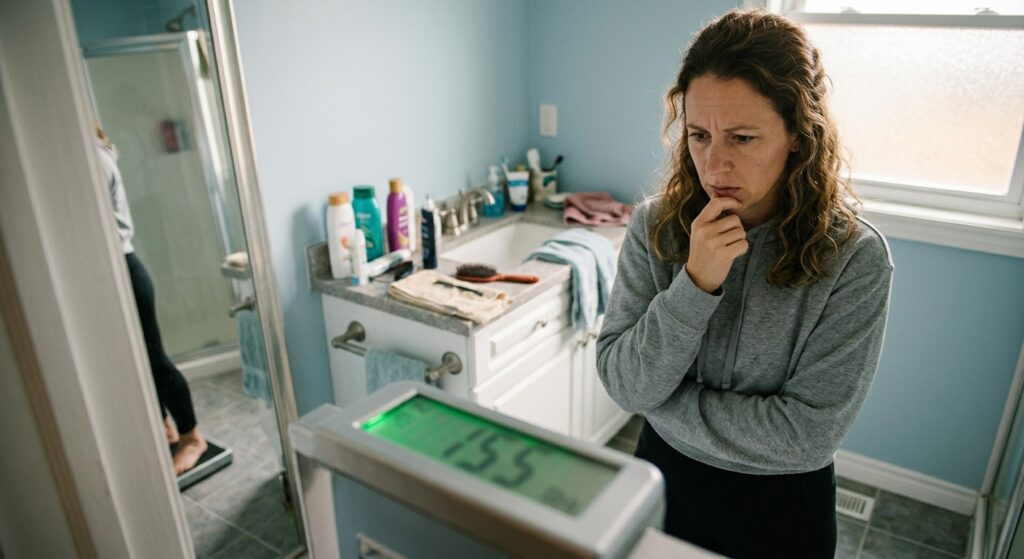
Unexplained Weight Gain: 8 Possible Causes
Unexplained weight gain can have several possible causes, ranging from medical conditions and medications to changes in sleep, stress, activity, and eating patterns.
Medical Reasons
An Underactive Thyroid
Your thyroid produces hormones that help regulate how your body uses energy. When the thyroid doesn’t produce enough hormones, a condition called hypothyroidism, several body processes can slow down.
Weight gain is one possible symptom of hypothyroidism. Other symptoms can include fatigue, feeling unusually cold, constipation, dry skin, thinning hair, and muscle or joint problems. However, weight gain alone doesn’t mean you have a thyroid problem. Many conditions can cause similar symptoms, so a healthcare professional may need to consider your symptoms and medical history and, when appropriate, recommend thyroid testing.
Hormonal Changes
Hormones influence many processes involved in weight regulation. Certain hormonal conditions can be associated with weight gain, including polycystic ovary syndrome (PCOS). Hormonal changes during menopause can also affect body weight and body composition.
If your weight changes alongside other symptoms, pay attention to the timing. For example, changes in your menstrual cycle, new acne, increased facial or body hair, hot flashes, or other hormonal symptoms may provide useful information to discuss with your healthcare professional. These symptoms don’t necessarily point to one particular condition. They provide more context than weight gain alone.
Medications
Sometimes medication leads to weight gain. Certain medications can contribute to weight gain. These include some corticosteroids, medications used to treat depression or other mental health conditions, and some diabetes medications. If you notice your weight changing after starting a new medication or changing your dose, mention it to your healthcare professional or pharmacist.
Don’t stop taking prescribed medication on your own. Instead, ask whether weight gain is a possible side effect and whether alternative treatments may be appropriate for you.
Lifestyle Factors
Poor Sleep
Sleep can affect more than your energy levels. Getting too little sleep has been associated with higher body weight. Sleep deprivation can affect appetite, food choices, energy levels, and how much physical activity you feel able to do. Track your sleep patterns and consider whether they changed around the same time your weight started changing.
Chronic Stress
Stress can influence your weight in several ways. When stressed, some people tend to eat more and crave certain foods. Sleep habits may also change for some, and some people become less physically active. For some people, food can also become a way of coping with difficult emotions.
NIDDK notes that stress and emotional factors can influence eating and activity patterns and may contribute to weight gain. This doesn’t mean stress is always the explanation. Instead, consider whether something significant changed in your life before the weight gain began.
Fluid Retention
Not every increase on the scale represents an increase in body fat. Fluid retention, also called edema, can cause temporary or rapid weight gain and may appear as swelling in the feet, ankles, legs, hands, or abdomen. Rapid or unexplained weight gain accompanied by swelling or shortness of breath can sometimes indicate significant fluid buildup and should be evaluated by a healthcare professional.
Changes in Physical Activity
Your activity level changes without you noticing. Maybe you’ve started working at a desk for longer hours. Perhaps an injury has reduced your movement. You may have stopped walking as much, changed your commute, or simply become more sedentary during a busy period. These changes can be easy to overlook because they don’t necessarily feel like a major lifestyle change. That’s why it’s useful to consider your overall daily movement, not just whether you exercise.
Changes in Eating Patterns
Sometimes your diet hasn’t changed dramatically, but small changes have accumulated over time.
You may be:
- Eating slightly larger portions
- Snacking more often
- Drinking more calorie-containing beverages
- Eating out more frequently
- Choosing more energy-dense foods
- Eating at different times because of a changed routine
These changes don’t mean you’ve done something wrong. They suggest that looking at patterns can be more useful than assuming that unexplained weight gain has one hidden medical cause.
What Other Symptoms Can Occur With Unexplained Weight Gain?
Weight gain becomes more useful to investigate when you consider it alongside other changes.
Weight gain + Fatigue + Feeling cold
These symptoms may be worth discussing with a healthcare professional because they can occur with hypothyroidism.
Weight gain + Menstrual Changes
Hormonal conditions may need to be considered depending on the person’s symptoms and medical history.
Weight gain + Swelling
As mentioned earlier, weight gain accompanied by swelling can be related to fluid retention and should be evaluated, especially if the weight gain is rapid or accompanied by shortness of breath.
What About Sudden or Rapid Weight Gain?
A sudden increase on the scale doesn’t always mean you’ve gained body fat. Short-term changes in hydration, food intake, bowel movements, or hormonal fluctuations can temporarily affect your weight. However, rapid or unexpected weight gain can sometimes be related to fluid retention, medication changes, or an underlying health condition. Pay attention to how quickly the change occurs and whether it happens alongside other symptoms.
For example, sudden weight gain accompanied by swelling in the legs, ankles, feet, hands, or abdomen may be related to fluid retention. If rapid weight gain occurs with swelling or shortness of breath, contact a healthcare professional promptly. Rather than assuming that every sudden change is caused by diet or exercise, consider what else may have changed around the same time. This can help you and your healthcare professional identify possible contributing factors.
When Should You See a Healthcare Professional for Unexplained Weight Gain?
Don’t panic over small weight changes. However, persistent or unexplained weight gain is worth discussing with a healthcare professional, especially when it occurs alongside other symptoms.
MedlinePlus recommends contacting a healthcare provider for excessive weight gain without a known cause and notes symptoms such as constipation, hair loss, feeling unusually cold, or swollen feet with shortness of breath as reasons to seek medical attention.
Your healthcare professional may ask:
- How much weight have you gained?
- How quickly did it happen?
- When did you first notice the change?
- What medications are you taking?
- Have your eating or activity patterns changed?
- Are you under unusual stress?
- What other symptoms are you experiencing?
Depending on your symptoms and history, they may recommend further evaluation or testing.
What to Track Before Seeing a Doctor
Before your appointment, tracking a few details can help your healthcare professional understand what changed and when.
- Weight changes: Note when you first noticed the change and whether the weight gain has been gradual or sudden.
- Other symptoms: Check changes such as fatigue, feeling unusually cold, constipation, swelling, hair changes, or menstrual changes.
- Medications and supplements: Include anything you’re currently taking, as well as any medication or dosage changes that happened around the time the weight gain began.
- Sleep patterns: Notice whether you’re sleeping less, waking frequently, or experiencing a significant change in your usual sleep routine.
- Physical activity: Consider whether your daily movement has changed, even if your formal exercise routine hasn’t.
- Eating patterns: Look for changes in portion sizes, snacking, sugary drinks, meal timing, or how often you’re eating outside.
You don’t need to arrive at your appointment with a diagnosis. The goal is simply to give your healthcare professional a clearer picture of what changed, when it changed, and what other symptoms or circumstances occurred alongside it.
Conclusion
Unexplained weight gain isn’t always as simple as eating too much or exercising too little. Changes in hormones, thyroid function, medications, sleep, stress, fluid balance, physical activity, and eating patterns can all play a role in changes in body weight. If you’ve noticed unexpected weight gain, look beyond the number on the scale and consider the bigger picture. Pay attention to whether you’re experiencing any other symptoms or changes that began around the same time.
If the weight gain is persistent, unexpected, or accompanied by other symptoms, don’t rely on generic weight-loss advice or try to diagnose the cause yourself. A healthcare professional can help assess your symptoms, medical history, medications, and other factors to determine what may be contributing.
Frequently Asked Questions
Can hormones cause unexplained weight gain?
Yes. Certain hormonal conditions, including hypothyroidism and PCOS, can be associated with weight gain. Hormonal changes during menopause can also affect body weight and composition.
When should I see a doctor about unexplained weight gain?
Consider speaking with a healthcare professional if your weight gain is persistent, happens without an obvious explanation, or occurs alongside other symptoms such as fatigue, feeling unusually cold, constipation, swelling, or shortness of breath. Rapid or significant changes in weight may also warrant medical evaluation.
Can stress cause weight gain?
Stress can influence eating, sleep, and physical activity, which may contribute to weight gain. The effect varies from person to person.
Need E-E-A-T-compliant content for your health brand?
I help digital health platforms and medical practices publish research-backed content that answers search queries. Learn more about my healthcare content writing services or view my SEO writing portfolio.
Medical Disclaimer: The information provided here is for educational and informational purposes only and is not a substitute for professional medical advice, diagnosis, or treatment. Always seek the advice of your physician or another qualified healthcare provider with any questions regarding a medical condition, and never disregard or delay seeking professional medical care because of something you have read or seen online. If you suspect a medical emergency, contact your doctor or local emergency services immediately.
Arooj Anjum is a professional SEO content writer specializing in search-optimized, E-E-A-T-compliant healthcare, health, and B2B digital content.