Healthcare Marketing Funnel: 4-Stage Content Mapping Strategy
A healthcare marketing funnel helps connect your content to the different stages of a potential customer’s journey, from discovering your brand to exploring solutions and eventually taking action.
Think about the last time you discovered a healthcare brand online. I’m sure you didn’t read one post, click a service page, and immediately book a consultation.
Or did you? More often, you probably started with a question. You looked for information, explored possible solutions, and only later decided whether a particular brand was worth considering. That’s exactly why your website needs content for those different moments.
A blog post might introduce someone to your brand. A detailed guide can help them understand their options. A service page can answer the questions they have before making a decision. And a clear call to action can make it easier to take the next step when they’re ready.
You see where this is going! That’s what a healthcare marketing funnel does. It connects these pieces so your content isn’t working as a collection of isolated pages, but as part of a journey that moves people from discovering your brand to taking action. For B2B health brands, this matters even more. Buying decisions aren’t impulsive. They often involve multiple stakeholders, longer timelines, and a real need for trust. A well-planned funnel makes sure your content meets people where they are, instead of leaving them to figure out what to do next on their own.
The 4 Stages of a Healthcare Marketing Funnel
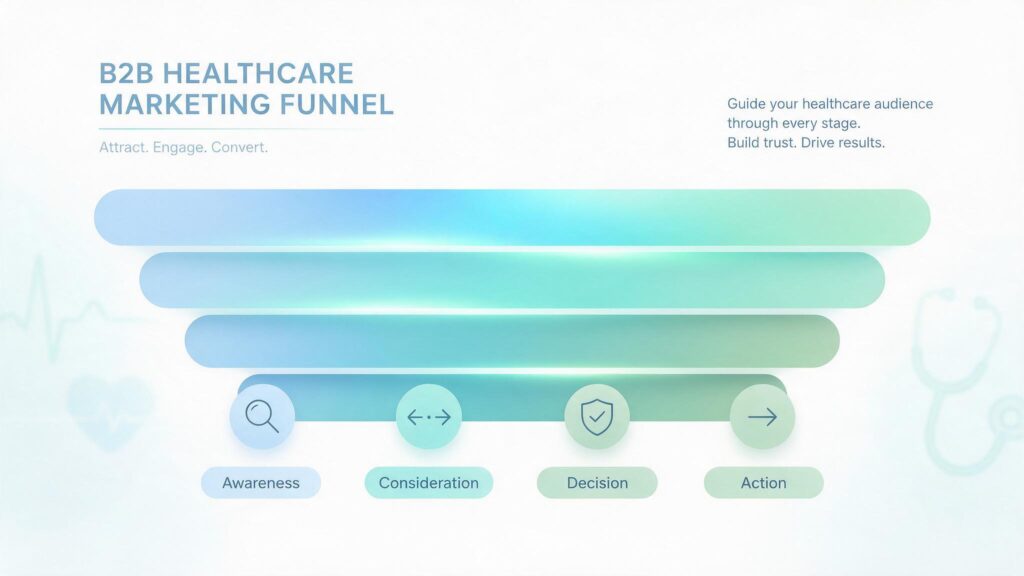
Awareness: Help People Discover Your Brand
The first step is creating awareness for your brand. At this stage, people are usually looking for answers, not a product or provider. Your content should help them understand their problem while gently introducing your brand.
Useful content includes:
- Educational blog posts
- Problem-focused articles
- Practical guides
- Social media content
- Educational videos
Example: Someone searches “Why am I always tired?” and discovers your healthcare brand through an educational article. The goal is to earn attention and build familiarity, not to push a sale. Learn more about healthcare content marketing funnel.
Consideration: Help Them Explore Their Options
At this point your clients understand their problem. Their questions become more solution-focused. They may want to know:
- “What can I do about this?”
- “What types of solutions exist?”
- “How do I choose between them?”
Useful content includes:
- In-depth guides
- Treatment or service explanations
- Comparison content
- FAQs
- Expert-led content
- Relevant case studies
This is where many healthcare websites have a gap. They publish plenty of educational content but don’t give readers enough information to evaluate their options.
Decision: Give Them Reasons to Trust You
Now the visitor is evaluating your brand and asking:
- “Why should I choose you?”
- “Will this work for someone like me?”
Your website may need:
- Detailed service or product pages
- Provider or expert information
- Credentials and qualifications
- Case studies
- Appropriate reviews or testimonials
- Clear FAQs
- Evidence and credible sources
Trust should be built throughout the funnel, but decision-stage content should make it easy for people to evaluate your credibility.
Action: Make the Next Step Clear
Once someone is ready, don’t make them search for what to do next.
Depending on your business, the action could be:
- Book a consultation
- Request a demo
- Contact the clinic
- Start an assessment
- Purchase a product
- Subscribe
The CTA should match the visitor’s stage. Someone reading their first educational article may not be ready to “Book Now.” Someone who has already explored your services may be. The goal is simple: make the next step obvious when they’re ready to take it.
How to Map Content to Your Healthcare Marketing Funnel
A simple content mapping process can help:
- List your core services or products: Start with what your business actually wants people to choose.
- Identify the questions people ask before choosing them: Think beyond keywords. What would someone need to know before considering your solution?
- Group those questions by funnel stage: Separate questions that build awareness from those that help people compare, evaluate, or decide.
- Build topic clusters around your core services: Instead of creating isolated blog posts, group related topics around a central service or core topic. A pillar page can cover the broader subject, while supporting articles answer specific questions your audience may have at different stages of the funnel.
- Connect related content with internal links: Link supporting articles to the relevant pillar page, service page, and other useful resources. This helps readers move naturally through the content journey while making the relationship between your topics clearer.
- Audit your existing content: Map your blogs, guides, FAQs, service pages, and other resources to the relevant stages.
- Identify the gaps: You may find plenty of awareness content but very little that supports consideration or decision-making.
- Check health-related content carefully: For YMYL topics, make sure factual claims are accurate, current, appropriately sourced, and supported by relevant expertise.
The result is a content system where each piece has a purpose, rather than a collection of pages published simply because a keyword looked promising.
Common Healthcare Marketing Funnel Mistakes
Even a well-planned funnel can lose people along the way. Some common problems include:
- Creating lots of awareness content but little decision-stage content
- Sending every visitor to the same service page, regardless of what they were reading
- Using sales-heavy CTAs too early, before the reader is ready
- Having service pages with little supporting content to answer common questions
- Publishing content without a clear business purpose
- Measuring success only through traffic, rather than what happens after the visit
A funnel should help people move forward naturally, not push everyone toward the same action.
How to Measure Whether Your Funnel Is Working
Traffic is only one part of the picture. Look at what happens after people arrive.
Useful metrics include:
- Organic traffic
- Engagement
- Service-page visits
- Leads
- Consultation or demo requests
- Conversion rate
- Content-assisted conversions
A blog post doesn’t need to generate a direct conversion to be valuable. It may introduce someone to your brand today and contribute to a conversion weeks later.
Conclusion
A healthcare marketing funnel isn’t just a path from a Google search to a sale. It’s a way to make sure your content grows with your audience as their questions change, from understanding a problem to exploring options to deciding whether your brand is right for them. If your healthcare website has plenty of content but no clear path connecting those pieces to your business goals, you don’t necessarily need more content. You need a better content journey with the understanding of healthcare marketing funnel framework. Because traffic alone isn’t the goal. The goal is to move the right audience from curiosity to confidence, and from confidence to action.
Frequently Asked Questions
What is a healthcare marketing funnel?
A healthcare marketing funnel maps the journey a potential customer takes from discovering a health-related question to exploring solutions and eventually taking action with a healthcare brand.
What content should be included in a healthcare marketing funnel?
It can include educational blog posts, guides, FAQs, comparison content, service pages, case studies, expert information, and decision-focused content. The right mix depends on what your audience needs at each stage.
How can healthcare brands tell if their marketing funnel is working?
Look beyond traffic. Track engagement, service-page visits, leads, consultation or demo requests, conversions, and content-assisted conversions to understand how content contributes to business results.
How B2B Healthcare Marketing Funnels Differ
How I Can Help With Your Healthcare Content Funnel
If your healthcare brand has content but no clear path connecting it to your business goals, I can help you identify the gaps and build a more strategic content system.
My healthcare and wellness content services include:
- SEO content strategy
- Healthcare and wellness blog writing
- B2B healthcare content
- Website and service page content
- Content audits and gap analysis
- SEO content designed around search intent and the customer journey
The goal isn’t simply to publish more content. It’s to create the right content for the right stage of the journey, while building visibility, trust, and a clear path toward action.
ABOUT AUTHOR
Arooj Anjum is a health content writer with 10 years experience in the writing industry.