Healthcare Content Writing vs Medical Writing: Key Differences
Healthcare content writing and medical writing are often confused because both involve communicating health and medical information. But they serve different audiences, purposes, and communication needs.
A medical writer typically creates technical, scientific, or regulatory documents for healthcare professionals, researchers, pharmaceutical companies, and regulatory audiences.
A healthcare content writer creates accessible content for patients, caregivers, consumers, and health-focused audiences. Their work may combine medical research, patient education, SEO, and healthcare marketing.
Understanding the difference can help healthcare businesses choose the right type of writer for their content goals.
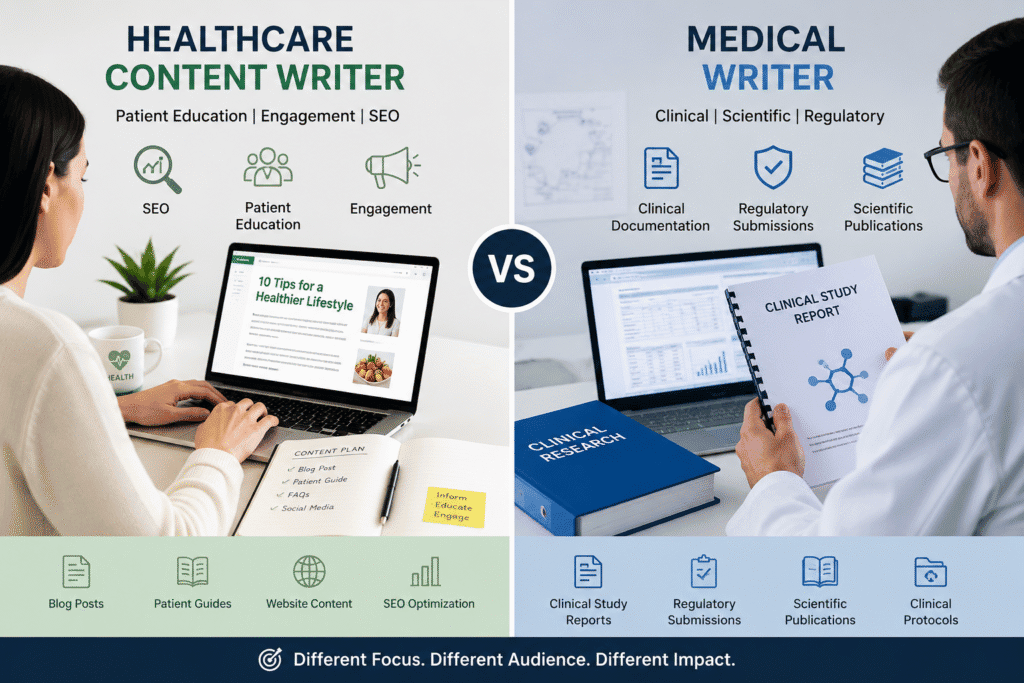
Healthcare Content Writing vs. Medical Writing: Key Differences
Medical writing and healthcare content writing differ mainly in their audience, purpose, and style. Medical writing is generally created for healthcare professionals, researchers, pharmaceutical companies, and regulatory audiences. It focuses on scientific, clinical, or regulatory communication and often uses technical, specialized language.
Healthcare content writing is designed for patients, caregivers, consumers, and broader health audiences. It focuses on explaining complex health information in clear, accessible language while supporting patient education, healthcare marketing, and SEO. The goal is to make information easier to understand without changing its meaning.
What Does a Medical Writer Do?
Medical writing focuses on communicating scientific and clinical information accurately and precisely.
Medical writers may work with pharmaceutical companies, clinical research organizations, healthcare organizations, or other scientific teams.
Common medical writing deliverables include:
- Clinical study reports (CSRs)
- Clinical trial protocols
- Regulatory documents
- Investigator brochures
- Scientific manuscripts
- Medical white papers
- Research-related communications
The intended audience is often highly specialized. Readers may include physicians, researchers, regulatory professionals, and other healthcare professionals.
Because these documents can support clinical, scientific, or regulatory processes, precision and familiarity with scientific literature are particularly important.
What Does a Health Content Writer Do?
Healthcare content writing focuses on making health information useful and understandable for a broader audience.
A healthcare content writer may create content for healthcare businesses, wellness brands, health technology companies, digital health platforms, or publishers.
Common healthcare content writing deliverables include:
- SEO health blog posts
- Patient education articles
- Website content
- Health and wellness articles
- FAQs
- Email newsletters
- Healthcare marketing content
- Service and landing pages
The goal is not simply to make medical information shorter or simpler.
Good healthcare content should preserve the meaning of the underlying information while presenting it in language that the intended reader can understand.
For example, instead of repeatedly using the term hypercholesterolemia, consumer-facing content might introduce it as high cholesterol and explain the medical term when relevant.
Medical Content Writing vs. Healthcare Content Writing: Which One Does Your Business Need?
The answer depends on what you need the content to accomplish.
Choose medical writing when you need:
- Scientific or technical documentation
- Clinical research documentation
- Regulatory submissions
- Technical communications for healthcare professionals
- Research-focused manuscripts or materials
Consider healthcare content writing when you need:
- Patient education content
- SEO blog posts
- Healthcare website content
- Consumer-friendly health information
- Health and wellness articles
- Content that supports organic search visibility
- Educational content that connects readers with relevant healthcare services
The two roles can overlap, too. A medical writer may have experience creating patient-facing content, while a healthcare content writer may have a strong scientific or biomedical background.
The important question is whether the writer has the experience and skills required for the specific type of content you need.
Why Healthcare Content Writing Requires More Than Simplifying Medical Terms
Good healthcare content is not just about taking a complicated medical term and replacing it with a simpler one. People often turn to the internet because they have a question about their health, and they want an answer they can actually understand and trust. That means healthcare content needs to get several things right at the same time.
It should be accurate and well-researched, but also clear and easy to follow. It should answer the question behind the search, use reliable sources where needed, and give readers a reason to trust the information. Even simple things like clear headings, shorter sections, and a logical flow can make a big difference.
This matters even more for health topics because many of them fall under Google’s Your Money or Your Life (YMYL) topics, where the quality and trustworthiness of information can be particularly important to users.
Healthcare Content Writing and SEO
SEO healthcare content is not about adding a keyword to every other sentence. It starts with understanding what the reader is actually looking for. Someone searching for “why am I tired after 8 hours of sleep” is probably looking for an explanation or possible causes. Someone searching for “fatigue treatment clinic near me” is much closer to looking for a service.
Those two searches may be related, but the content they need is very different. When healthcare brands understand that difference, they can create content that answers real questions, matches search intent, and naturally guides readers toward the next step when they’re ready.
Frequently Asked Questions
Is medical writing and health content writing the same?
No. Medical writing focuses on scientific and regulatory documents for healthcare professionals, while healthcare content writing creates patient-friendly content that educates, informs, and engages a broader audience.
Can a medical writer also write healthcare content?
Yes, some can. Medical writers with experience in patient education, healthcare communications, or content marketing can also create healthcare content. However, medical writing and healthcare content writing require different skills, writing styles, and objectives.
Which type of writer does my healthcare business need?
The right choice depends on your goals. Hire a medical writer for scientific and regulatory documents. Hire a healthcare content writer if you want to educate patients, increase organic traffic, and build trust online.
Conclusion
Medical writing and healthcare content writing both communicate health information, but they serve different purposes. Medical writing generally focuses on scientific, clinical, or regulatory communication for specialized audiences. Healthcare content writing focuses on making health information accessible and useful for patients, consumers, and broader audiences, while often supporting healthcare marketing and SEO.
For healthcare businesses, choosing the right writer starts with understanding the audience, the purpose of the content, and the outcome you want it to support.
Need consumer-friendly healthcare content?
I create research-based, SEO-focused healthcare and wellness content designed to educate readers, build trust, and support organic visibility.
Explore my [Health & Wellness Content Writing Services].
About the Author
Arooj Anjum is a healthcare and wellness content strategist and SEO content writer with a biomedical engineering background. She creates research-based health content that combines clear communication, search intent, and trust-focused content strategy.